
How to use vanilla
Split, scrape, measure, infuse and store your vanilla. And waste nothing: contrary to a common belief, the aroma is not confined to the tiny black seeds.
The aroma is not in the seeds
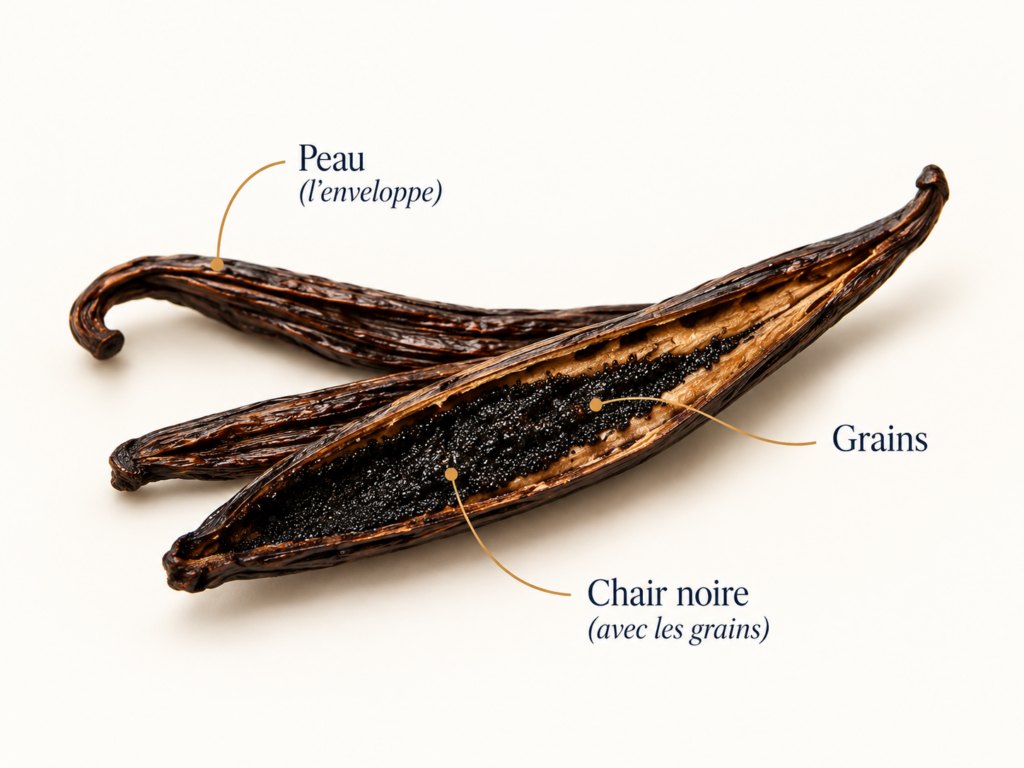
In a mature green bean, about 92% of glucovanillin, the natural precursor of vanillin, is concentrated in the tissues around the seeds. The black seeds mainly add texture and visual appeal: the aroma is found throughout the bean.
| The dark flesh | the dark tissues surrounding the seeds | ≈ 92% |
|---|---|---|
| The inner surface | the velvety layer lining the bean | included in the dark flesh |
| The skin | the outer layer | about 7%, though it releases aroma during infusion |
| The seeds | very little; they are visible but contribute little aroma | traces |
Using a vanilla bean
How to split and scrape a bean
The goal is to collect the flesh surrounding the seeds, rather than the seeds alone.
 1
1
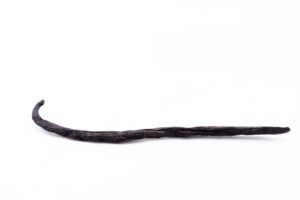
Flatten
Lay the bean flat and smooth it with your fingertips from base to tip.
 2
2
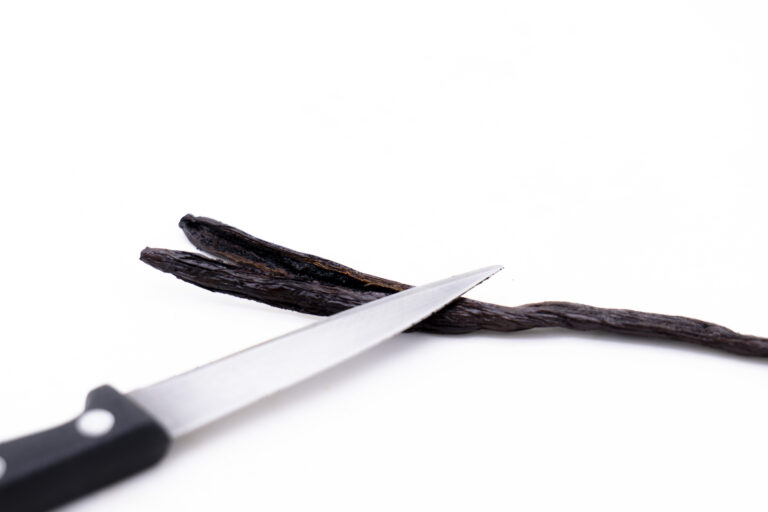
Split
Run the tip of a knife along its length without cutting all the way through.
 3
3
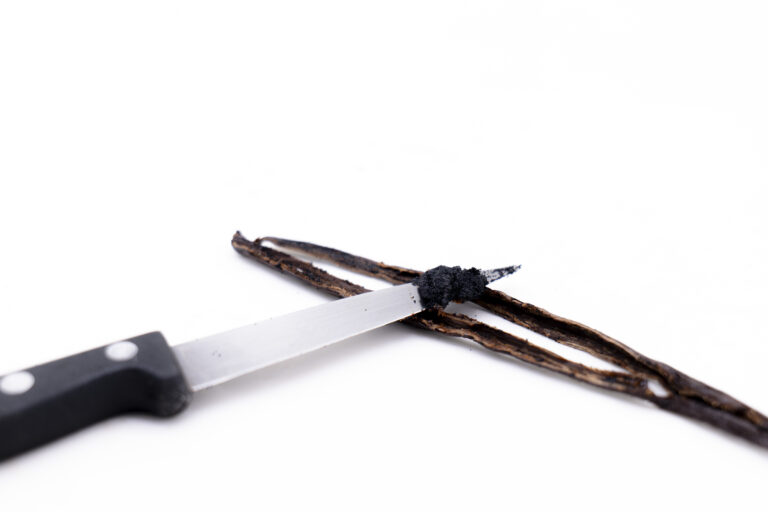
Scrape out the flesh
Use the back of the blade to scrape out the entire inside, leaving only the skin. This dark paste carries the aroma, not just the seeds.
 4
4
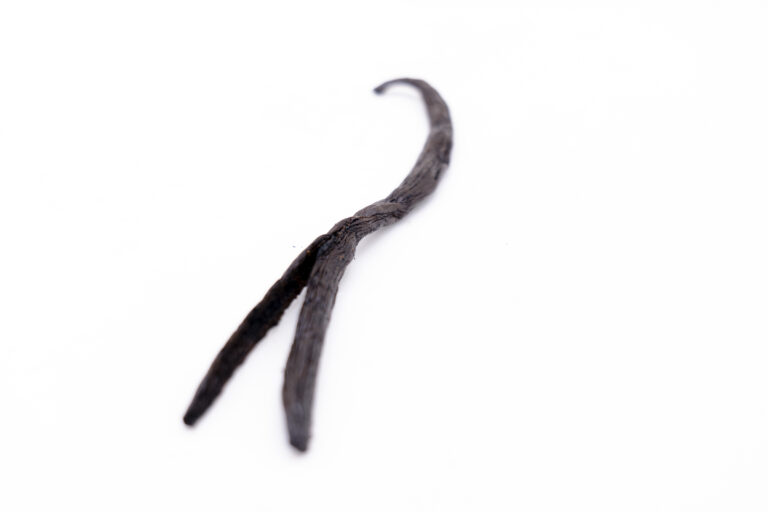
Keep the skin
It still has flavour: infuse it in a warm liquid or place it in a jar of sugar to make vanilla sugar.
How much should you use?
One bean is roughly equivalent to one level teaspoon of powder, about 2 g.
| For | Beans | Powder |
|---|---|---|
| 500 ml of cream or milk | 1 bean | 1 level teaspoon |
| 500 g of cake batter | 1 bean | 1 level teaspoon |
| 1 litre of ice cream | 2 beans | 2 teaspoons |
| A yoghurt, coffee or smoothie | — | 1 pinch |
Our vanilla has a rich aroma and at least 1.8% vanillin. Start with a little; you can always add more.
Infusion
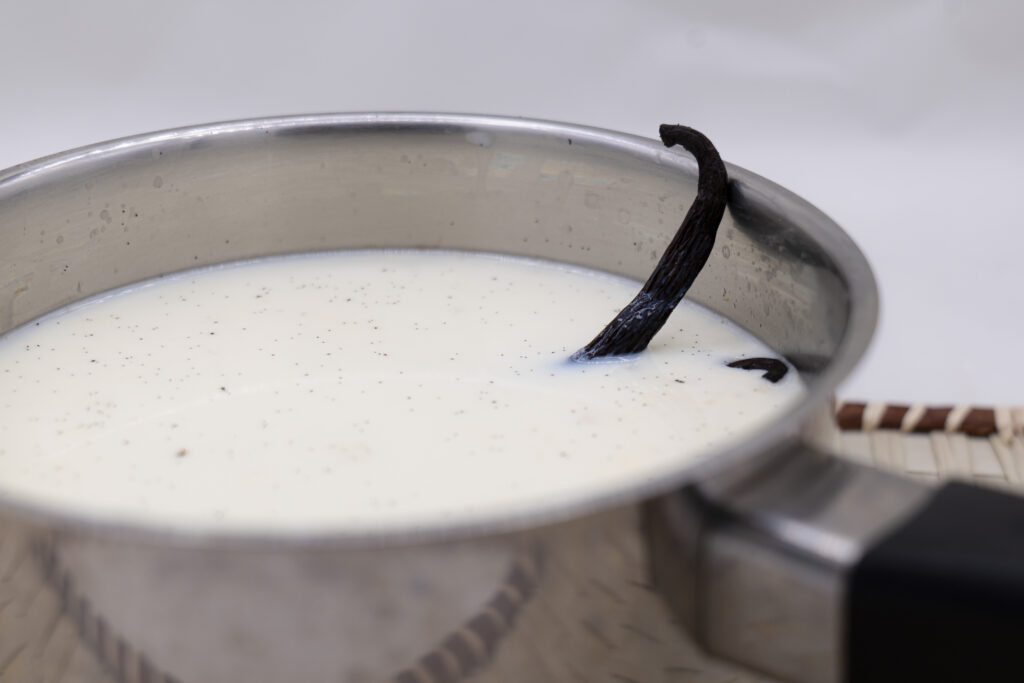
Bring the liquid to a gentle simmer, remove from the heat, add the scraped flesh and split bean, cover and leave for 20 minutes. The skin releases more flavour as it infuses, so do not discard it at this stage.
Never throw away a scraped bean
The skin still holds aroma, so a scraped bean is far from spent. You can use it two or three more times.
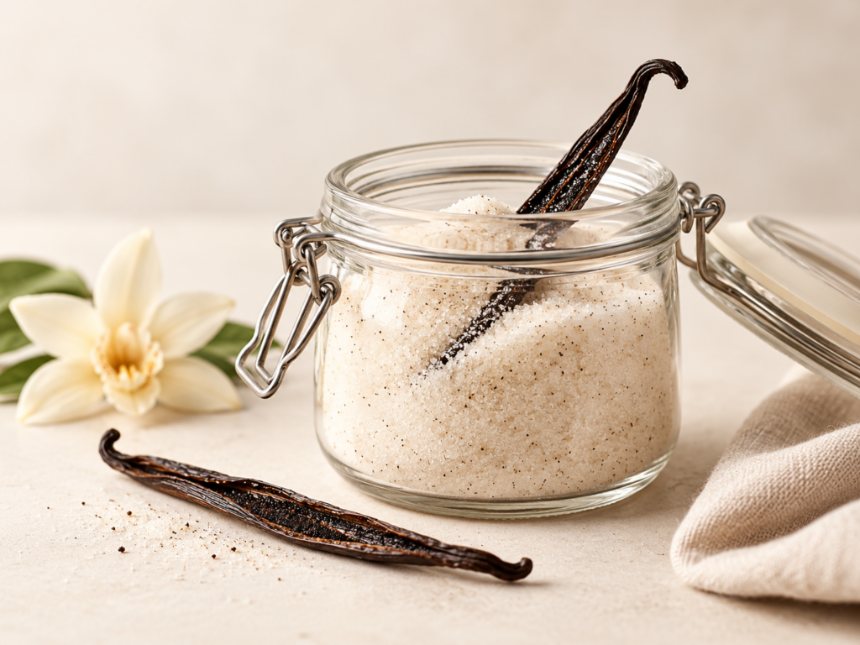
Vanilla sugar
Rinse and dry the bean, then place it in a jar of sugar. After two weeks, the sugar will be flavoured.
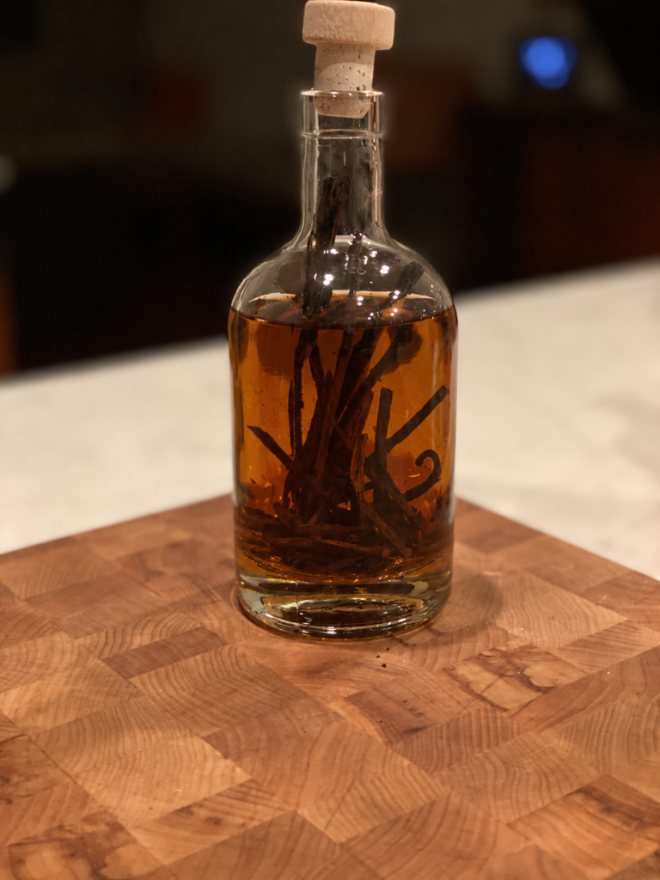
Homemade extract
Place five beans in 250 ml of rum or vodka, away from light. Ready in two months, and better after six.
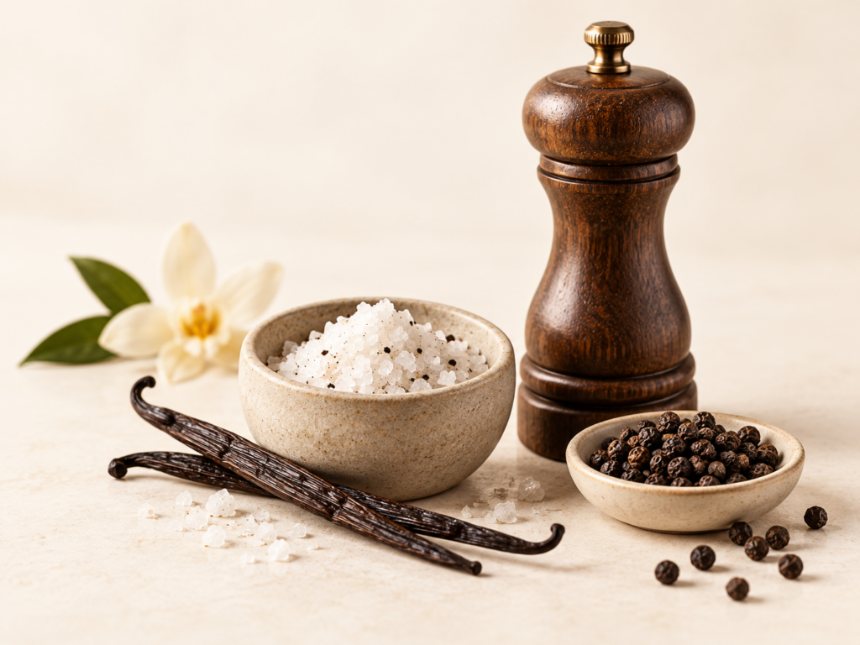
Vanilla salt and pepper
Dry a bean and grind it with salt or pepper. Excellent with white fish or foie gras.
How should you store it?




Frequently asked questions
A white coating has appeared on my beans. Is it mould?
Usually not: it’s vanillin frost. Vanillin crystallises on the surface of the richest beans, and the crystals dissolve during cooking. Real mould is fuzzy, greenish or grey, and smells musty.
Should I really keep the skin of the bean?
Yes. The skin releases flavour into a warm liquid and can then be used in vanilla sugar or homemade extract.
My bean is dry. Can I revive it?
Yes. Soak it for 20 minutes in a warm liquid off the heat.
Can I replace a bean with powder in a recipe?
Yes. Use about one level teaspoon of powder for one bean.
Need some vanilla?
Pouches of 20 beans or 40 g of powder, shipped from France.