Vanilla from Madagascar
An orchid native to Mexico, pollinated by hand one flower at a time, and a region in north-eastern Madagascar that produces more vanilla than anywhere else in the world.
A demanding orchid
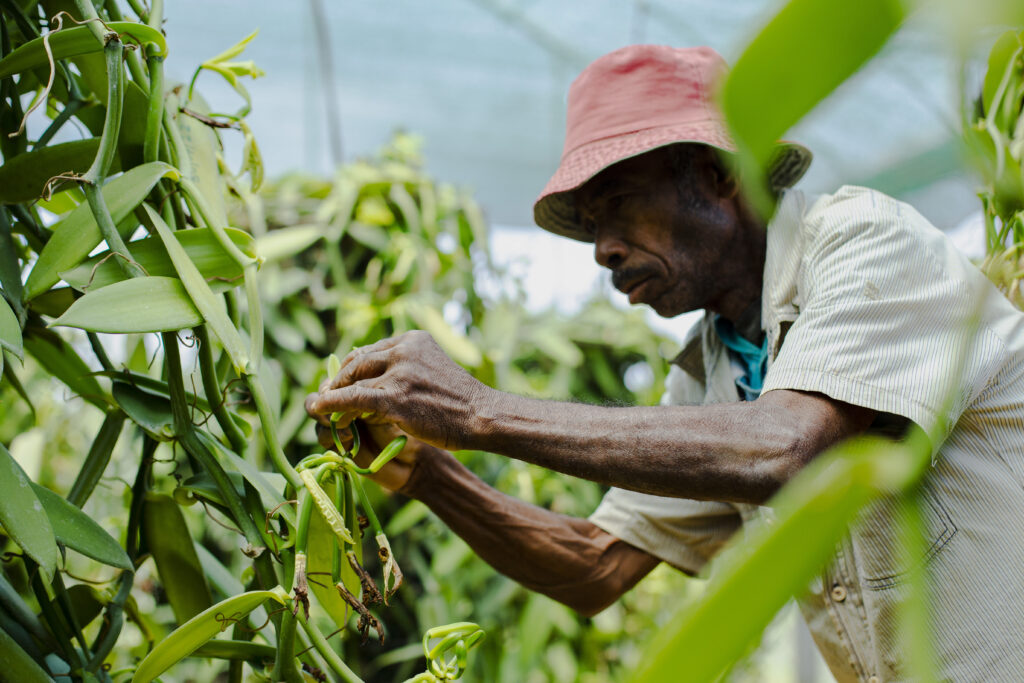
Vanilla is the fruit of a climbing orchid. Among cultivated species, Vanilla planifolia is the most widely grown. Each flower opens for just one day. In Madagascar, every flower is pollinated by hand on the day it opens.
From Mexico to Madagascar
Mexico
The Totonac and later the Aztecs cultivated vanilla long before the arrival of Europeans.
Bourbon Island
Edmond Albius developed hand pollination, making it possible to grow vanilla beyond Mexico.
Madagascar
The vanilla vine reached the north-eastern coast. The name “Bourbon” endured, inherited from Réunion Island.
The SAVA growing region
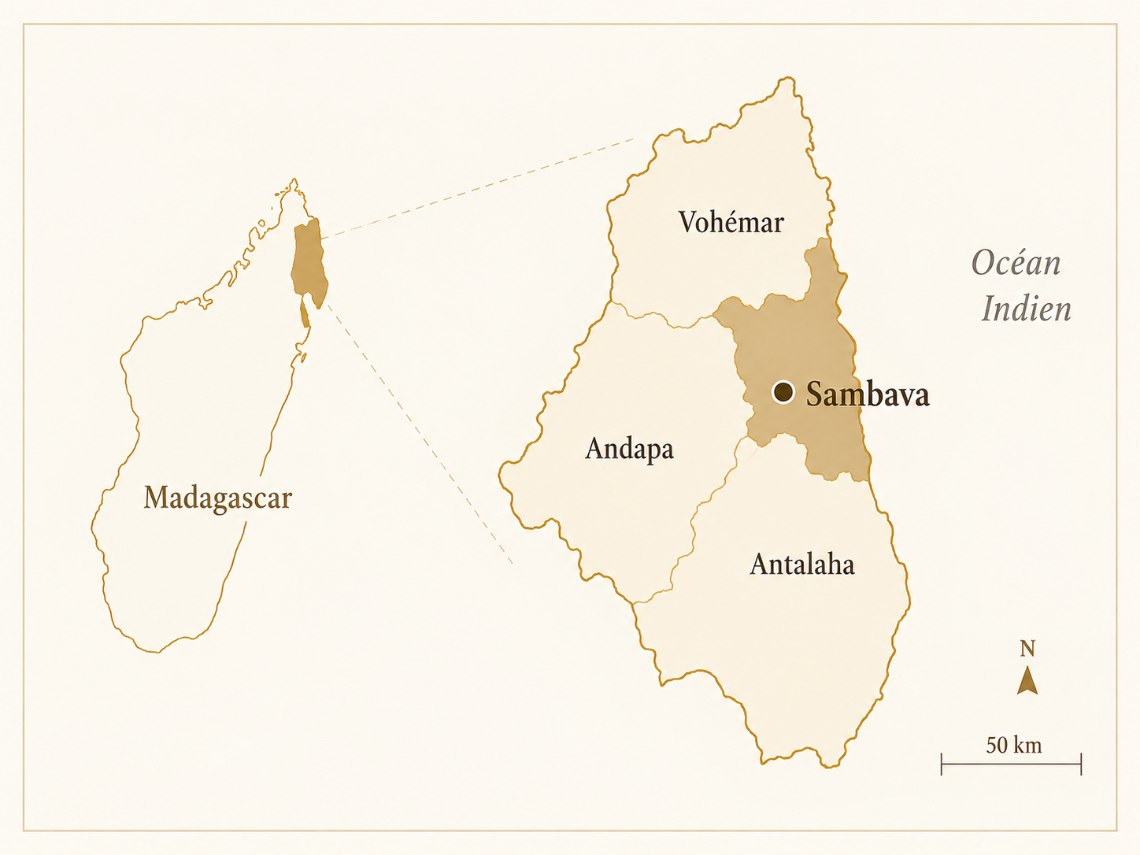
SAVA takes its name from its four districts: Sambava, Antalaha, Vohémar and Andapa. Bordered by the Indian Ocean and the highlands, the region gives vanilla vines the steady warmth and humidity they need.
Altitude shifts the harvest by several weeks from one slope to another, creating distinct flavour profiles from one plot to the next.
The world’s leading vanilla-producing region is where we grow and cure our vanilla.
Our varieties
Alongside Bourbon, we grow two rare Malagasy hybrids and two less common varieties in our greenhouses.
planifolia
Round and rich, the classic choice.
tahitensis
Floral and aniseed notes.
pompona
Plump beans with a powerful, woody aroma.
tsy taitra
An intense, woody balance.
manitra ampotony
Deep chocolate and spice notes.
Grades
Grade depends on moisture, not variety. The more moisture a bean retains, the softer, oilier and more aromatic it is.
| Grade | Moisture | Vanillin | Best suited for |
|---|---|---|---|
| Gourmet | 30–38% | ≥ 1.8% | Baking, scraping, home cooking and retail |
| TK | 25–30% | ≥ 1.6% | Baking, food service and home cooking |
| Red | 20–25% | ≥ 1.4% | Extraction and flavour houses |
| Cuts | 15–20% | ≥ 1.0% | Extraction and grinding |
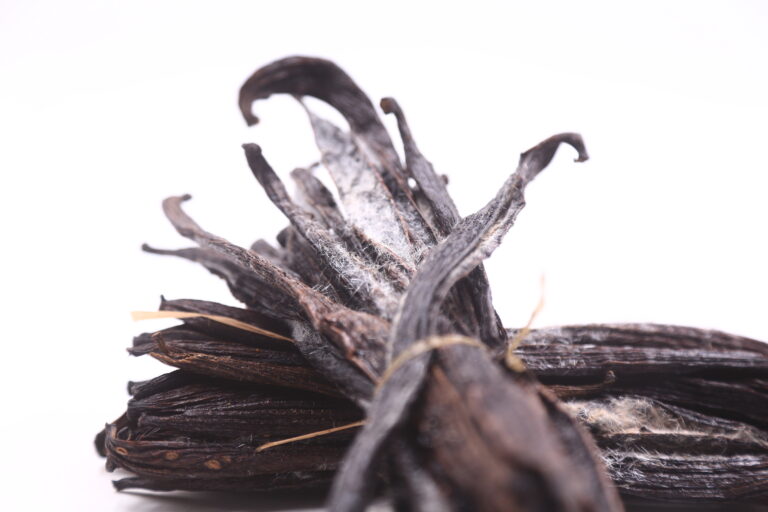
White crystals are not mould
White crystals may appear on the surface of the richest beans. This is vanillin rising to the surface, a sign of quality rather than a defect.
Our vanilla, ready to enjoy
Beans and powder, cured in Sambava and shipped from France.