
Our know-how
Vanilla is not a standardised product. Even beans from the same field can differ: harvesting, curing and grading them well takes skill our team has built over decades.
Why we grow and cure our own vanilla
Our production facility was established in Sambava in 2015, but it did not start from scratch. The people who joined it already had decades of experience with vanilla, allowing us to aim for premium quality from the very first season. We could have simply bought and resold vanilla; instead, we chose to grow it ourselves for two reasons that still guide us today.
We choose when to harvest.
This is the most important point. A bean picked too early will never catch up in aroma. By harvesting each bean at full maturity, we start with the richest possible fragrance and vanillin content.
We grow new varieties.
In our greenhouses, we grow two rare Malagasy hybrids, tsy taitra and manitra ampotony, with flavour profiles not found elsewhere in the SAVA region. We also grow tahitensis, giving buyers an unusually broad range of aromatic profiles.
Two sources, one standard
Our greenhouses give us rare varieties and control; our sourcing network gives us volume. We apply the same standards to both.
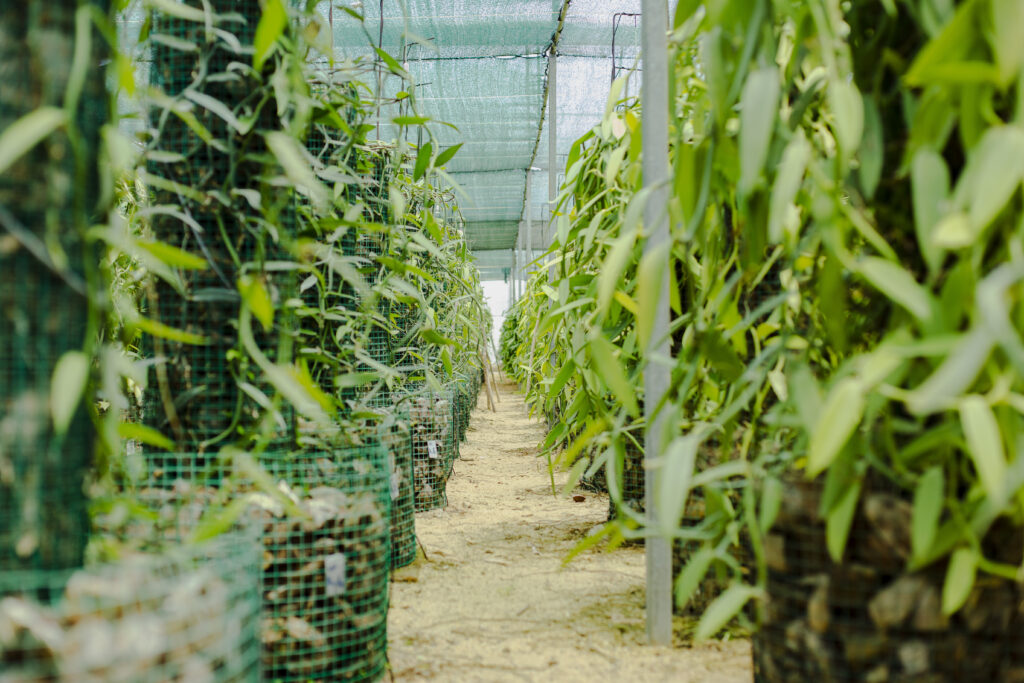
Our greenhouses
2,500 m² in Sambava, planted by our team.
- Vines grown from disease-free in-vitro plants
- Every flower hand-pollinated within 12 hours
- We choose the harvest day, bean by bean
- Our rare varieties grow here
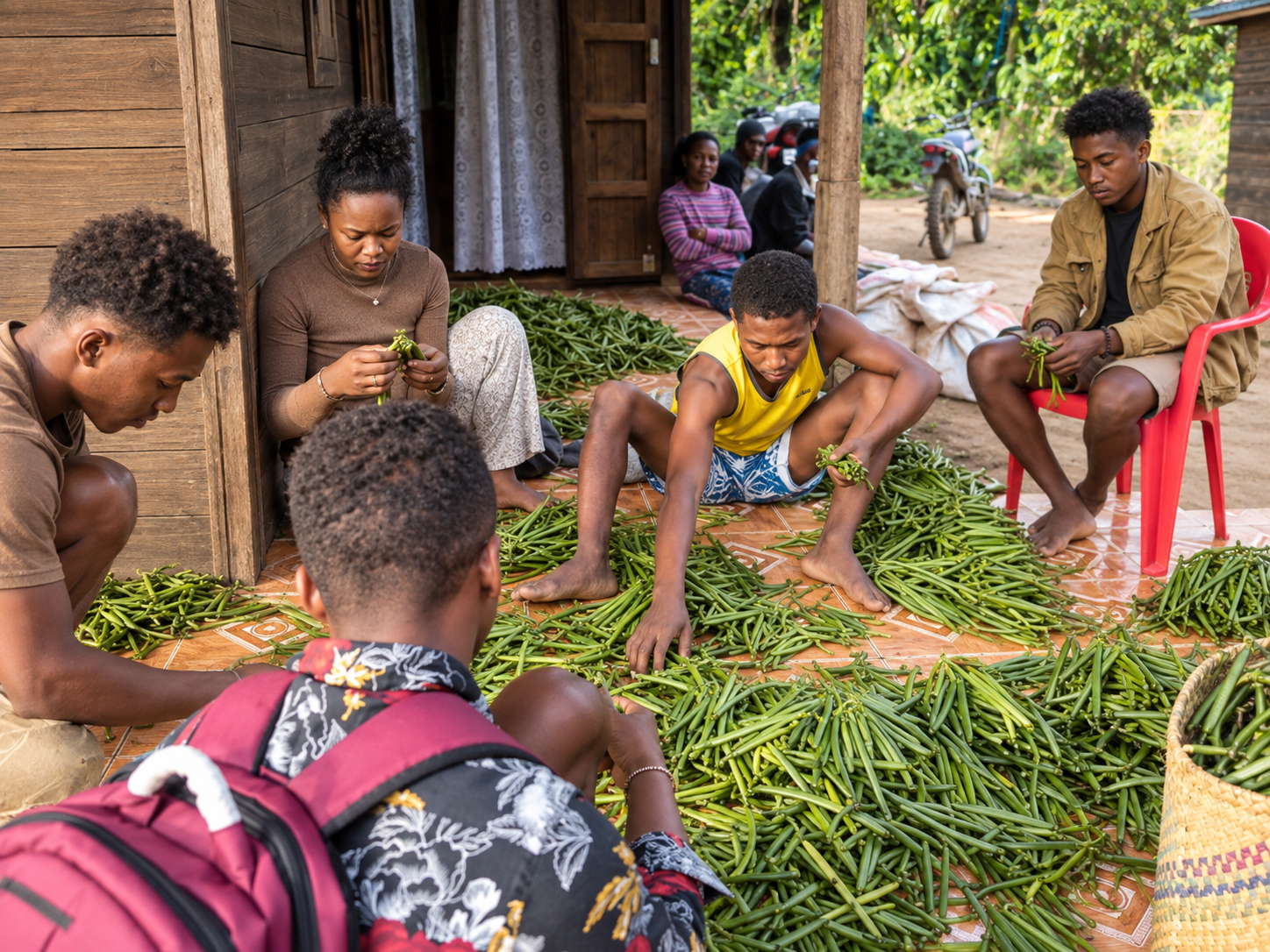
Our sourcing network
Growers and cooperatives across the SAVA region.
- The same families, season after season
- Several growing areas, including late high-altitude harvests
- Every lot of green vanilla is inspected on arrival
- The volume our greenhouses alone could not supply
Curing, step by step
It takes almost a year to turn a green bean into a cured black bean. Each stage can undo the work that came before it.
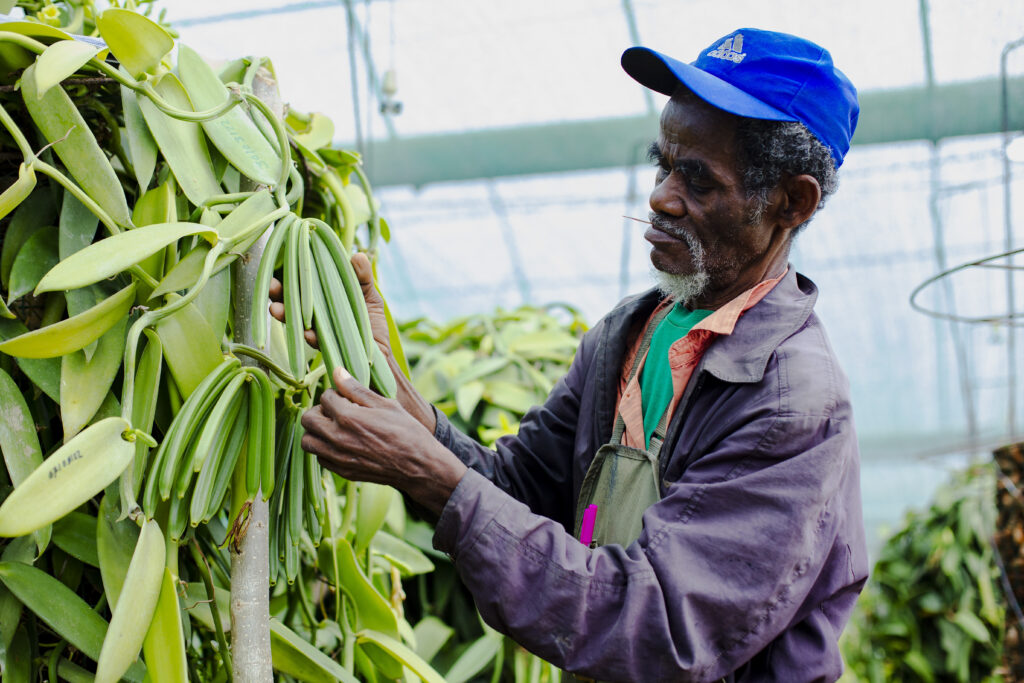
Beans picked one by one at full maturity.
June – early September
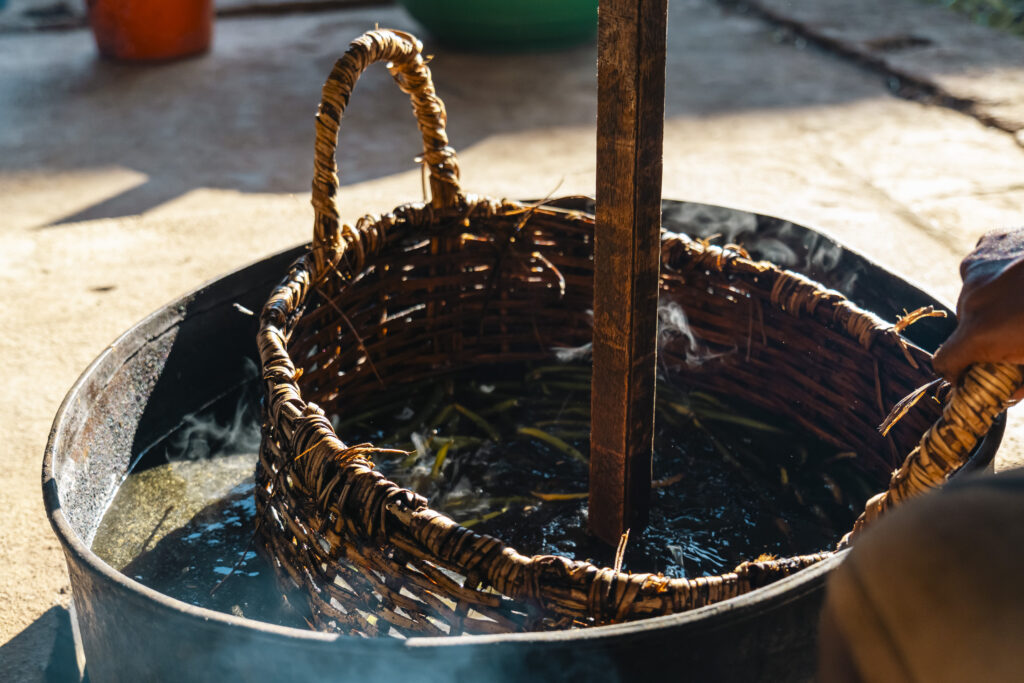
A 63–65°C water bath. The heat stops the beans’ vegetative growth.
3 minutes
Still hot, the beans are wrapped in wool blankets. They sweat and turn brown.
24–48 hours
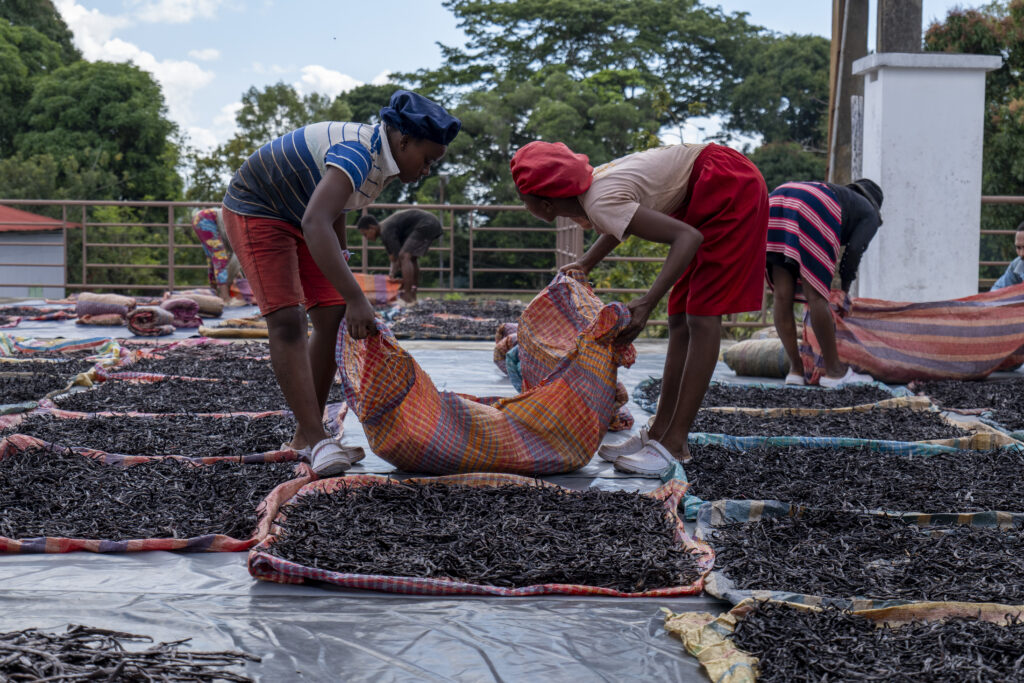
The beans spend a few hours in the sun each day, then dry in the shade in a ventilated room.
3–8 weeks
Each bean is rolled and softened by hand, spreading its aroma and bringing out its oily sheen.
Every day
In trunks lined with waxed paper, with daily inspection.
2–8 months
By length, moisture and appearance: Gourmet, TK, Red and Cuts.
Lot by lot
Bundled, then vacuum-packed in our own workshops.
Before shipping
Daily sorting
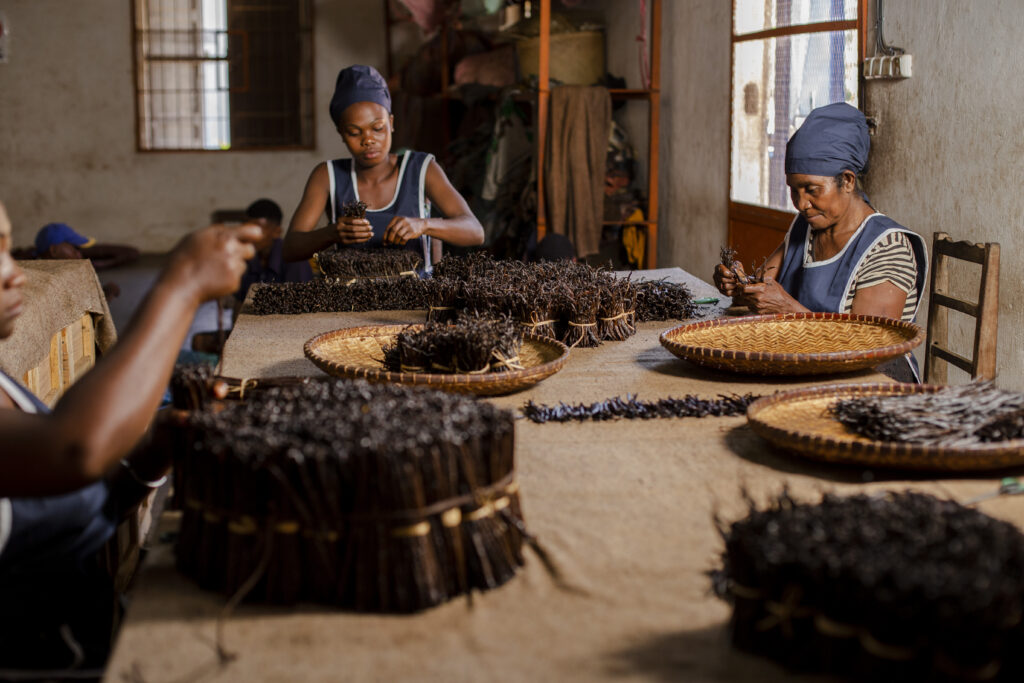
Sorting is not a single step; it is a daily task. Throughout conditioning, the trunks are opened each day and every bean is checked by hand, one at a time: felt, smelled and held up to the light. A bean drying too quickly is set aside; a bean that remains damp is isolated before it can affect the others.
It takes more than one season to learn how to spot a bean that may develop a problem weeks later. This task calls for the most experience and ensures every bean is checked and sorted before shipping.
Stabilisation
Vanilla that has not been properly stabilised can develop mould weeks after purchase. Conditioning helps us prevent that risk.
Conditioning in trunks takes two to eight months, bringing each lot to the right moisture level while developing its aroma. Beans removed too early remain active and may ferment; beans left too long lose their suppleness. Our Gourmet beans leave the workshop at 30–38% moisture, and ship only then.
White crystals may appear on the surface of the richest beans. This is vanillin rising to the surface, a sign of quality rather than a defect. Real mould is fuzzy, green or grey.
The people who cure it
None of this can be captured in a written procedure. Knowing when to remove beans from the sweating boxes, how much sun to give them on a windy day, and when conditioning is complete takes years to learn.
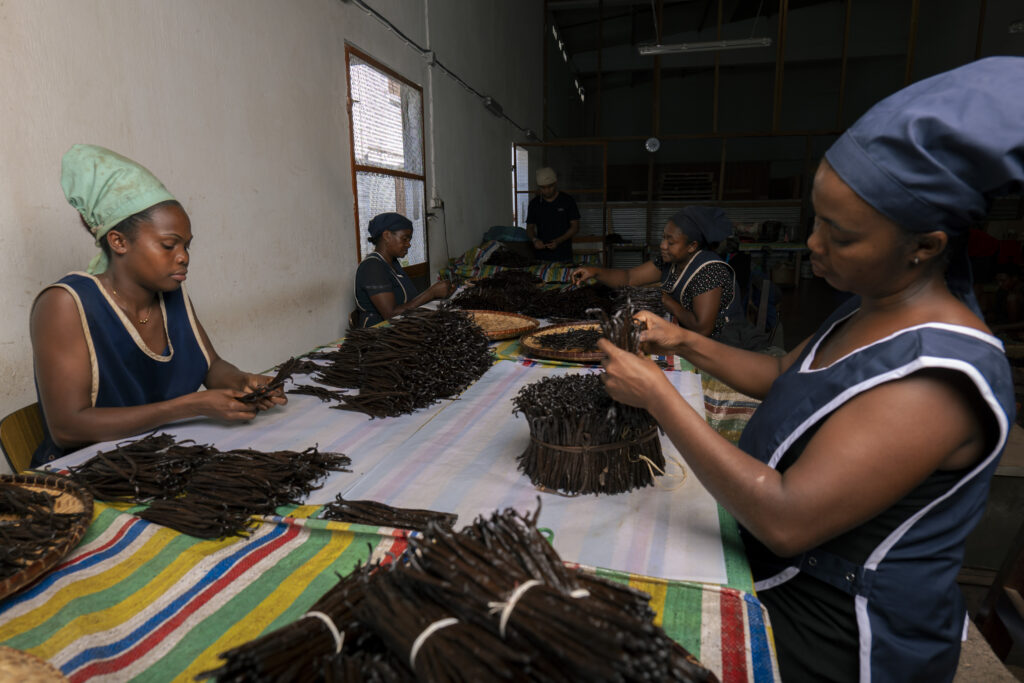
- 20 people in the workshop
- Decades of experience even before our first season
- The same careful handwork, bean by bean, from sorting to grading
Our commitments
Discover our vanilla
Beans and powder, cured in Sambava and shipped from France.